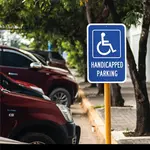
ADA Lawsuits, Liability Turns on Operational Control, Not Only Tenancy
Being a tenant doesn’t automatically make you liable for ADA violations common areas. California law focuses on control.
Don't Have an Estate Plan? Actually it Already Exists. California Wrote It Most people know they “should” have an estate plan set up. But did you know that if you do not have an estate plan, the State of California already wrote one for you, but it's almost always not the plan you would choose...
California partition actions are increasingly being used in disputes involving inherited homes and co-owned family property. While California’s Partition of Real Property Act (“PRPA”) created important protections such as appraisals, buyout rights, and court-supervised sales, families often discover that protecting their equity requires aggressive legal strategy. This article explains how forced sales occur, how investors may exploit family disputes, and the practical risks involving valuation battles, broker disputes, auction sales, accounting claims, and bankruptcy issues. It also discusses the equitable powers California courts retain to supervise partition cases and protect co-owners facing unfair or predatory forced-sale tactics.
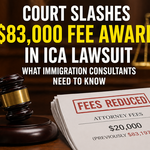
A major California court decision is reshaping how attorney fees are awarded in Immigration Consultant Act (ICA) lawsuits. After the California Court of Appeal reversed an $83,197.50 fee award as excessive, the trial court reduced it to just $20,000 on remand. The ruling highlights growing judicial scrutiny of inflated billing, boilerplate litigation, and unsupported hourly rates. It also confirms that limited public benefit and lack of case complexity can significantly reduce fee recovery. For immigration consultants and small business owners, this case provides powerful legal precedent to challenge excessive attorney fee demands and defend against high-pressure ICA lawsuits.
Boilerplate lawsuits under the Immigration Consultants Act (ICA) are often designed to secure quick injunctive relief and drive up attorney’s fees. This article explains how to respond strategically—focusing on early resolution, correcting any compliance issues, and avoiding unnecessary litigation that increases fee exposure. It also highlights key appellate guidance showing courts will scrutinize excessive or duplicative fee requests. The right approach is not to over-litigate, but to narrow the case, challenge the need for an injunction, and build a record to limit fees. A sample Answer is included to help defendants respond effectively while protecting themselves from inflated fee claims.
Buying a home is one of the largest financial decisions most people will ever make. But what happens if the deal does not close? Can the seller keep your entire deposit? Under California law, the answer is often no. California Civil Code § 1675 provides important protections for residential buyers.
For many property owners, few situations are more concerning than discovering that another person claims the legal right to access or use their land. These disputes commonly arise when a neighbor asserts a right-of-way, a utility company claims access for infrastructure, or someone references an old easement that does not appear on recent surveys or title documents. These claims often involve easements, which can significantly affect property rights. Before responding to such a claim, it is important for property owners to understand what an easement is under California law and what a claimant must prove to legally enforce one.
When buying or financing commercial real estate, two tools play a critical role in protecting your investment: title insurance and a property surveys. Although they are often discussed as routine closing items, they are actually powerful safeguards against hidden legal and physical problems that can affect ownership, value, and future use of the property. This article explains, in straightforward terms, how title insurance and surveys work, why they matter, and what buyers and lenders should understand before closing a commercial real estate transaction
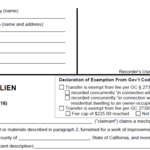
Mechanics liens are incredibly easy to file and can be devastatingly difficult to remove. If you discover a lien on your property, here is what you need to know and the steps you must take to protect your investment.
Losing a spouse or close family member is devastating. Unfortunately, many surviving spouses and heirs have also faced the added threat of foreclosure on the very home they shared, often because their name was not on the loan documents. California addressed this injustice through legislation commonly known as the Homeowner Survivor Bill of Rights, which expanded important foreclosure protections to certain successors in interest after a borrower’s death. If you are a surviving spouse or qualifying family member residing in a property subject to a mortgage, this law may provide meaningful protection.
This article is the second installment of a two-part series addressing how a party’s death affects pending civil litigation in California. The first article examined the procedural steps required when a plaintiff dies during a lawsuit. Here, the focus shifts to a different, but equally complex, scenario: what happens when the defendant dies before the case is resolved.
The legal defenses discussed in this installment highlight a critical reality: HOA fines are not automatically valid simply because the board claims authority to impose them. California law places meaningful limits on HOA power, and associations frequently overstep those boundaries, whether by adopting unenforceable rules, applying restrictions in an arbitrary manner, or issuing penalties without following the mandatory procedures set out in the Davis–Stirling Act and the association’s own governing documents.
Homeowners' associations in California have broad authority to enforce rules, but that authority has limits. Many homeowners assume they must simply accept HOA fines, yet California law gives them multiple avenues to dispute improper, excessive, or procedurally defective penalties. This first in...
When a party to a lawsuit dies, what happens to their case? In California, the death of a litigant doesn’t always end the litigation. This article breaks down the key steps attorneys must take when a plaintiff passes away during a pending civil case, covering which claims survive death, who can continue the lawsuit, and how damages are limited under the California Code of Civil Procedure. Learn how to preserve you rights and navigate the complex overlap between probate and civil courts.
California continues to refine its housing laws to make accessory dwelling units (ADUs) and junior accessory dwelling units (JADUs) easier to build, and to ensure consistency in how local governments regulate them. A new bill revises multiple provisions of the Planning and Zoning Law to clarify size definitions, streamline approval procedures, and extend state oversight over local ordinances governing JADUs.
If you're facing a motion for inflated attorney’s fees after an Immigration Consultant Act (ICA) lawsuit, you have the right to challenge it. Based on the IRDC v. Ramirez appellate decision, courts can reject excessive fees—especially when based on boilerplate pleadings or self-dealing. Through strategic discovery, you can demand billing records, template complaints, and proof of corporate separateness to expose inflated claims. Our firm helps clients gather evidence to reduce or eliminate unjustified fee awards. Don’t settle out of fear—let us help you fight back with facts. Contact the Law Office of Steve Lopez for a confidential consultation.
A California appellate court has reversed an $83,197.50 attorney fee award against immigration consultant Aurelio Ramirez, ruling the fees were excessive and unsupported. The lawsuit, filed by Immigrant Rights Defense Council (IRDC), involved boilerplate claims and resulted in a generic injunction requiring Ramirez to comply with existing law. The court found IRDC’s billing inflated, the 1.5 multiplier unjustified, and the public benefit minimal. This decision offers hope to immigration consultants facing aggressive litigation and inflated settlement demands. Consultants now have strong precedent to challenge excessive attorney fees and defend against mass-filed ICA lawsuits with minimal factual basis.
Introducing Our 2026 California Real Estate Law Update Series - Part 1 of 10 As 2025 draws to a close, new legislation is set to reshape the landscape of California real estate starting in 2026. To help property owners, investors, landlords, and real estate professionals stay ahead, check our weekly updates.
When it comes to California real estate transactions, every detail in the purchase agreement matters, especially the liquidated damages clause. Many buyers and sellers assume this clause guarantees the seller a deposit if the buyer backs out. But the reality is more complex. If a buyer never actually pays the deposit, can the seller still enforce the liquidated damages clause?
Buying a home is one of life’s biggest milestones, but hidden risks can surface long after the purchase. One of the most common and costly issues California homeowners face is discovering an unpermitted structure. Whether it’s a converted garage, an addition, or a retaining wall, these code violations can create serious legal, financial, and safety problems. Even if the work was done by a prior owner, current homeowners can still be held responsible.
Easements are one of the most common—and confusing—issues in California property law. They grant limited rights for others to use your land, such as driveways, utilities, or shared access. While some easements are routine, disputes often arise over blocked access, prescriptive claims, or unclear boundaries. These conflicts can affect property value and even lead to litigation. In this article, we explain the main types of easements, how they’re created, and what legal remedies are available to resolve disputes. If you’re facing an easement issue, knowing your rights is essential to protecting your property.
If you live in a community governed by a Homeowners' Association (HOA) in California, there's some significant news you need to know. Buried within the recent state budget legislation (Assembly Bill 130) are major reforms to the Davis-Stirling Act that directly impact how HOAs can levy fines agai...
If you're considering taking legal action in Los Angeles, it’s essential to understand the civil litigation process in California.
Contracts form the backbone of most business and personal transactions in California. But when one party fails to honor their obligations, it may constitute a breach of contract—triggering legal rights and remedies. If you're involved in a dispute over a contract in the Greater Los Angeles area, understanding the basics of California contract law can help you protect your interests.
Partition actions and quiet title lawsuits are two distinct legal remedies used in California real estate disputes. A partition action allows co-owners to divide or sell jointly owned property when they cannot agree on its use or sale. In contrast, a quiet title action resolves ownership disputes and clears title defects, establishing who legally owns the property. While partition suits are common among co-owners, quiet title actions often arise from fraudulent deeds, boundary issues, or adverse claims. Understanding the difference helps property owners choose the correct legal strategy to protect their interests and avoid prolonged conflict or litigation.
At the Law Offices of Steve Lopez, we represent individuals, families and businesses throughout California in legal matters ranging from Real Estate, Civil Litigation, Family Law, and Estate Planning.