
Introducing Our 2026 California Real Estate Law Update Series - Part 1 of 10
As 2025 draws to a close, new legislation is set to reshape the landscape of California real estate. To help property owners, investors, landlords, and real estate professionals stay ahead, our firm is launching a weekly article series: “2026 California Real Estate Law Update.”
Each week through the first week of January, we'll highlight key laws taking effect in 2026—covering everything from HOA regulations and disclosure requirements to AI in property marketing and landlord-tenant changes.
Our goal is to make these complex updates accessible and practical, so you can enter the new year fully informed and compliant.
Stay tuned every week for clear, lawyer-written breakdowns of the most important California real estate laws for 2026, and how they impact you.

New Disclosure Rule for Digitally Altered Real Estate Photos (Effective January 1, 2026)
Assembly Bill 723 – Business and Professions Code § 10140.8
Starting January 1, 2026, California real estate professionals must comply with new disclosure requirements when using digitally altered or AI-generated photos in property listings and advertisements.
Under AB 723, any real estate broker, agent, or person acting on their behalf who includes a digitally modified image in marketing materials must clearly disclose that the image has been altered.
Disclosure Requirements
When an edited or AI-generated image is used to promote a property for sale, the following must appear directly adjacent to or on the image:
-
A clear and conspicuous statement informing viewers that the image has been digitally altered.
-
A link, URL, or QR code leading to a publicly accessible website that displays the original, unedited version of the image, clearly identified as such.
-
The statement must also note that the original photo can be viewed using the provided link or code.
If the advertisement appears on a website controlled by the broker or agent, they may comply instead by including the unaltered photo directly within the listing, rather than linking externally.
What Counts as a “Digitally Altered Image”
An image is considered digitally altered if it was:
-
Created or edited by, or under the direction of, a real estate professional or their representative; and
-
Modified with photo editing software or artificial intelligence to add, remove, or change visual elements, including fixtures, furniture, appliances, paint colors, landscaping, flooring, facades, or exterior views such as neighboring homes or cityscapes.
These changes may enhance visual appeal but risk misrepresenting the property's true condition or layout.
What Is Not Considered Digital Alteration
Minor photo adjustments—like correcting lighting, color balance, exposure, or cropping—are not considered digital alterations, as long as they do not materially change the property's appearance.
Does It Apply to Leases?
Yes, this rule also applies to leases longer than one year.
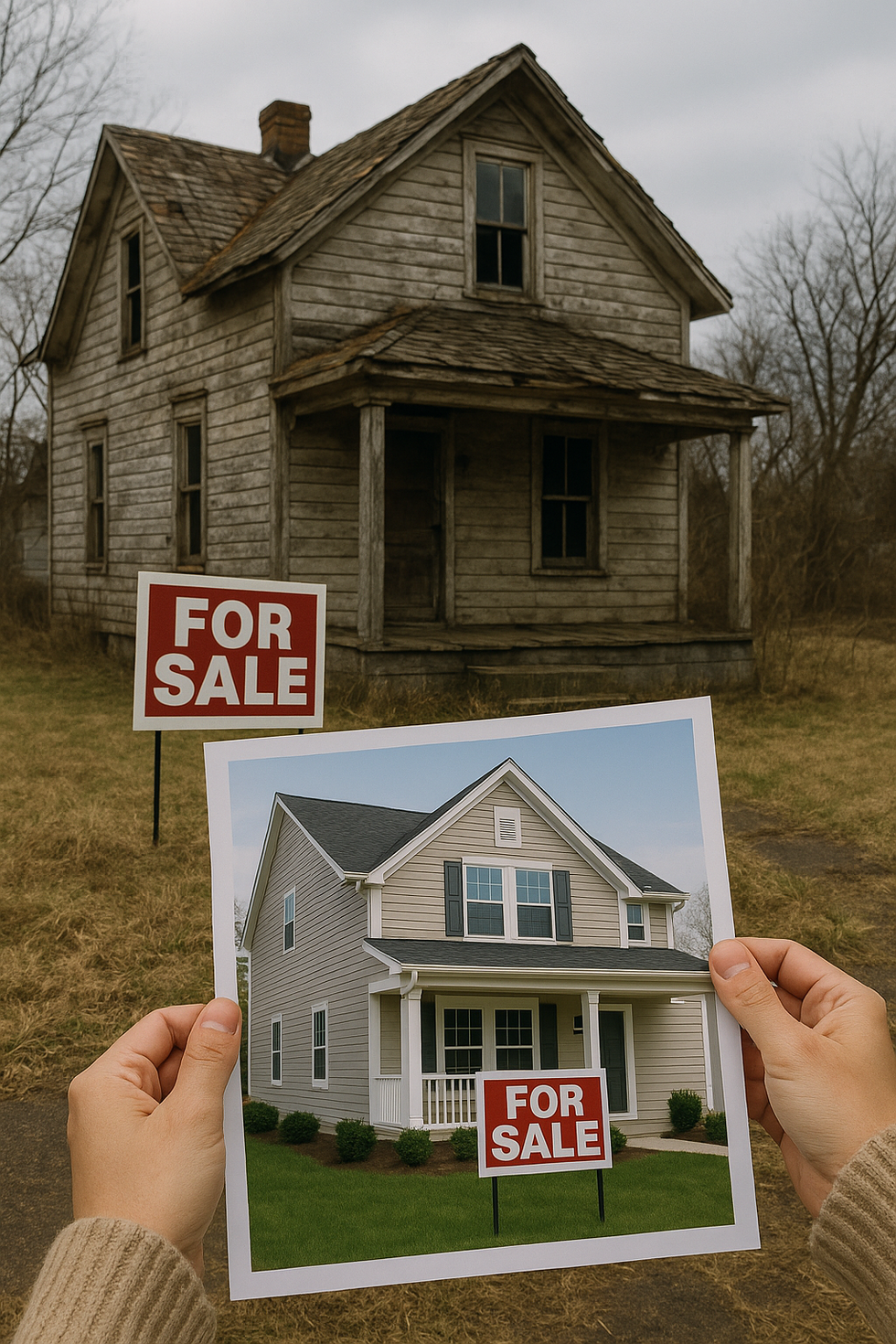
⚠️ Beware: The Hidden Risks of Using AI Images to Cut Costs
With AI tools and virtual staging software becoming cheaper and more accessible, many realtors and sellers are turning to them as a cost-saving alternative to hiring professional photographers.
While AI can create visually stunning listings, it can also cross the line into misrepresentation—especially if digital enhancements make a property appear significantly different from reality. Misleading visuals can expose agents and sellers to legal liability under California's consumer protection and advertising laws, as well as disciplinary action from the Department of Real Estate (DRE).
In other words, the short-term savings from skipping a photographer could lead to long-term legal and reputational costs.

New Disclosure Requirement for Tobacco and Nicotine Residue in Residential Sales (Effective January 1, 2026)
Assembly Bill 455 – Business & Professions Code § 10084.2; Civil Code § 1102.6k; Health & Safety Code § 25417.2
Beginning January 1, 2026, California law will require sellers of residential property to disclose any known tobacco or nicotine residue, as well as any history of smoking activity on the premises. This obligation applies to transactions where a Transfer Disclosure Statement (TDS) is required.
Seller's Disclosure Obligation
It is the seller's responsibility to inform potential buyers—in writing—if they have actual knowledge of:
-
Residue from smoking tobacco or nicotine products on the property, or
-
Any history of residents or occupants smoking tobacco or nicotine products on the premises.
This includes sales of residential one-to-four unit properties, as well as manufactured or mobile homes.

What Counts as “Residue from Smoking Tobacco”
The law defines residue from smoking tobacco (also known as thirdhand smoke) as the chemical buildup that lingers after smoking tobacco or nicotine products. This residue:
-
Settles into carpets, walls, and furniture;
-
Penetrates building materials; and
-
Can remain for years even after smoking has stopped.
It may be identified by the smell of tobacco smoke or by laboratory testing that detects elevated nicotine levels on surfaces or in household dust.
Importantly, “smoking tobacco or nicotine products” includes the use of electronic cigarettes and vaping devices, not just traditional tobacco products.
Transactions Covered
This new disclosure applies to all real estate transactions that require a Transfer Disclosure Statement (TDS), meaning it generally affects:
-
Sales of one-to-four unit residential properties;
-
Manufactured homes and mobile homes; and
-
Leases lasting more than one year.
Like the TDS, certain exemptions apply, including transfers made through probate, foreclosure, bankruptcy, REO sales, and specific trusts.
The law also gives buyers a right to cancel the purchase within:
-
Three days after personal delivery of the disclosure, or
-
Five days if the disclosure is delivered electronically or by mail.
The California Association of Realtors (C.A.R.) is expected to update the Seller Property Questionnaire (SPQ) to include this new disclosure requirement.
Updates to the Homeowner's Guide to Environmental Hazards
The Homeowner's Guide to Environmental Hazards will also be updated to include information about thirdhand smoke. The update will be prepared by the Center for Tobacco and the Environment at San Diego State University, using existing staff and research resources.
The revised guide will educate consumers about:
-
The presence of thirdhand smoke as a common environmental hazard in residential properties;
-
The health and environmental risks associated with this residue and how to reduce exposure; and
-
Reliable sources where consumers can learn more about mitigating thirdhand smoke hazards.
⚠️ Beware:
Although it's unknown yet how courts will treat the failure to disclose smoke residue in this new law, failure to disclose known real estate defects can usually lead to the buyer suing the seller for damages, which may include repair costs, diminished property value, and legal fees.
In Summary
Under Assembly Bill 455, sellers in California must now disclose any known history or residue from smoking or vaping on residential properties.

New Limits on HOA Fines in California (Effective June 30, 2025)
Assembly Bill 130 – Civil Code §§ 5850 and 5855
Beginning June 30, 2025, California homeowners' associations (HOAs) will face new restrictions on the amount and process of imposing fines on members. Under Assembly Bill 130, fines are now capped at $100 per violation, unless the violation directly affects health or safety within the common area or another homeowner's property.

Fine Limits and Exceptions
-
General Cap: HOAs may not issue fines exceeding $100 per violation.
-
Health and Safety Exception: Boards may impose higher fines only if they make a written finding during an open meeting that the violation creates a health or safety risk to people or property.
-
The written finding must be documented and available as part of the association's official records.
Opportunity to Cure Before a Fine
Before an HOA can levy a fine, the homeowner must be given a reasonable chance to correct the violation.
If the owner either:
-
Cures the violation, or
-
Submits proof of a financial commitment to correct the issue before the fine hearing,
then the HOA is prohibited from imposing any fine for that violation.

Notice and Dispute Resolution
-
Boards must now send the written results of the disciplinary hearing within 14 days (previously 15).
-
If the homeowner disagrees with the board's decision, they may request Internal Dispute Resolution (IDR) to resolve the issue.
-
If both the homeowner and the board reach an agreement through this process, it must be signed in writing and becomes legally binding and enforceable in court.
Concerns and Criticism
Legal commentators, including the Adams Stirling Professional Law Corporation, have raised concerns about vague or inconsistent language in AB 130.
Key criticisms include:
-
The law does not define “health and safety,” leaving uncertainty about what types of violations qualify.
-
It is unclear whether the limits apply to repeated or ongoing violations.
-
The term “agreement” between the board and homeowner after a hearing is not clearly defined.
Some experts warn that the new law may weaken HOA enforcement authority, since fines are often the primary deterrent for repeated rule violations.
Summary
Under AB 130, HOAs must act with greater transparency and restraint when imposing fines. Except in cases involving health or safety risks, penalties may not exceed $100 per violation, and homeowners are entitled to notice, an opportunity to cure, and fair dispute resolution.
See Related Articles to Dispute Resolution

Comments
There are no comments for this post. Be the first and Add your Comment below.
Leave a Comment