

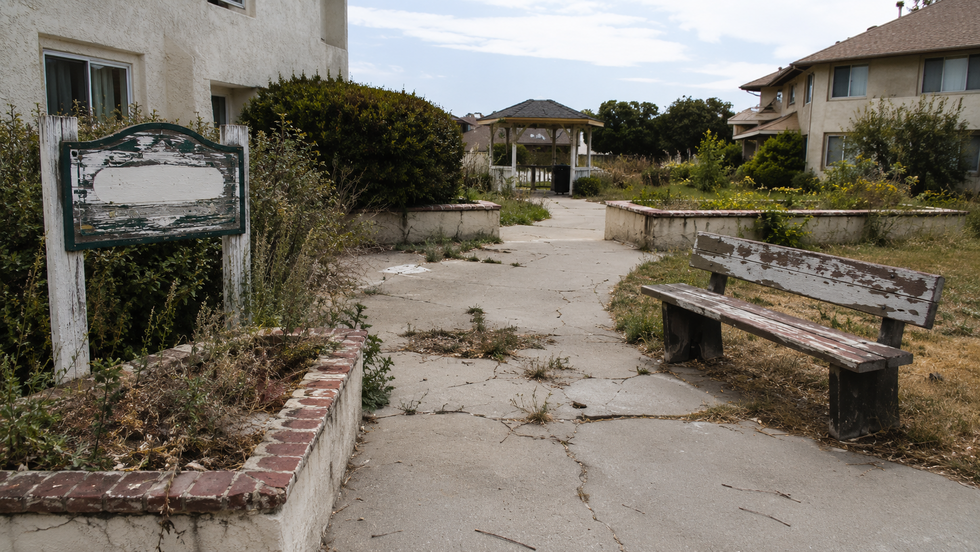
You pay your monthly fees on time and your regular assessments too. You follow the rules. But when a common area or amenity falls into disrepair, like a leaking roof over your unit, a cracked parking lot, a broken pool heater, or dangerously overgrown trees on the curb, sometimes your HOA does nothing. They delay. Or they simply claim the repairs aren't “in the budget.”
If this sounds familiar, you are not alone.
What Is the HOA Legally Required to Maintain?
California law draws a clear line: the HOA is generally responsible for the “common areas” unless the governing documents say otherwise.
Common areas include (but are not limited to) parking lots, roofs over shared structures, hallways in condominiums, elevators, and shared plumbing systems. If an amenity or space is listed in your CC&Rs as common property, the HOA has a binding legal duty to keep it in a reasonably safe and functional condition.
The Law Is on Your Side: Civil Code §4775
The foundation of your rights is California Civil Code §4775, which imposes a mandatory duty on HOAs to maintain, repair, and replace the common area. This duty is triggered when the HOA has notice of a condition requiring repair. Once on notice, the board must investigate the issue, determine the scope of the problem, and take appropriate corrective action.
Importantly, the law contains no escape clause. Nothing in §4775 says “if the money is in the budget” or “if the finances are in order.” Leaky roofs, unsafe balconies, or broken common‑area pipes need to be repaired, regardless of the HOA's competing priorities, §4775 states how is necessary HOAs are required to issue emergency assessments or as a last resort, obtain a loan to ensure necessary repairs are made, especially to essential utilities such as “gas, heat, water, or electrical services”

The Real Cost of HOA Inaction
When an HOA refuses to repair common areas, the damage rarely stays in the common area. Water intrusion from a neglected roof or shared plumbing can spread into your unit, damaging interior walls, personal property, and building systems. What begins as a common‑area repair issue quickly becomes a multi‑unit problem with much higher repair costs, damaging your private property.
Worse, the HOA's delay can create safety hazards. A cracked walkway, a broken security gate, or a malfunctioning pool drain can lead to serious injuries, and additional liability for the association.
What to Do When Your HOA Won't Fix Common Areas
Document Everything
Before you make any formal demand, gather your evidence:
- Dates and descriptions of the problem (leak, crack, broken equipment, etc.).
- Photos and videos showing the condition.
- Copies of all communications with the HOA (emails, letters, meeting minutes).
- Your CC&Rs and any maintenance matrix that defines which party is responsible for which areas.

Put It in Writing and Request Internal Dispute Resolution (IDR)
Do not rely on phone calls or hallway conversations. Send a written request to the HOA board, clearly describing the repair needed.
Then, invoke your right to Informal Dispute Resolution (IDR). Under California Civil Code §§5900–5920, every homeowner has the right to request IDR , and the HOA cannot refuse. IDR is a “meet and confer” meeting where you and the board (or at least one director) sit down to resolve the dispute without going to court. Importantly, you are never required to attempt IDR before filing suit; it is a tool you can use at your discretion.
If IDR Fails, Consider Alternative Dispute Resolution (ADR)
If the board remains uncooperative, you can offer Alternative Dispute Resolution, typically mediation. In mediation, a neutral third party helps both sides reach a settlement. This is often faster and less expensive than litigation, and it preserves relationships within the community.

File a Lawsuit to Enforce the Governing Documents
When the HOA continues to refuse repair despite your good‑faith efforts, you may need to take the matter to court. Homeowners can sue their HOA under one or more of the following legal theories:
-
Breach of Contract: Your CC&Rs form a binding contract between you and the HOA. The same way you have an obligation to pay assessments and follow rules, they are required to provide the services they've promised to provide in the CC&Rs.
When the board fails to maintain common areas as required, they are in breach of that contract. - Breach of Fiduciary Duty: HOA board members owe a fiduciary duty to act in good faith and in the best interests of the membership. A board that ignores known repair needs, shows favoritism, or mismanages reserves may be held liable for breaching that duty.
- Negligence: If the HOA's failure to repair creates a hazardous condition that causes injury or property damage, you can bring a negligence claim under premises liability principles.
Can You Recover Your Attorney's Fees?
Yes. Under California Civil Code §5975, if you prevail in a lawsuit to enforce the HOA's governing documents, including forcing the HOA to maintain common areas, you are entitled to recover your reasonable attorney's fees and costs. This fee‑shifting provision levels the playing field, ensuring that homeowners are not financially crushed simply for enforcing their rights.
Why You Need an Experienced Los Angeles HOA Attorney
HOA boards often hide behind procedural technicalities, budget excuses, or ambiguous language in the CC&Rs. As a homeowner, you need a lawyer who knows the Davis‑Stirling Act inside and out, who understands the local courts,
Whether you need to send a demand letter, participate in IDR or mediation, or file a lawsuit to force your HOA to act, our firm will be your advocate every step of the way.
Disclaimer: This article is for informational purposes only and does not constitute legal advice. You should consult with a qualified attorney regarding your specific situation.


Comments
There are no comments for this post. Be the first and Add your Comment below.
Leave a Comment